27 January 2026 - Brussels, Belgium
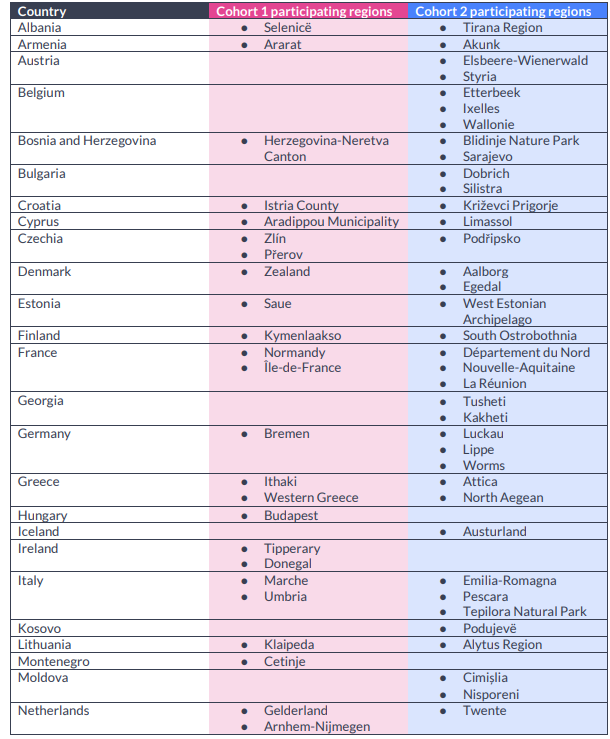
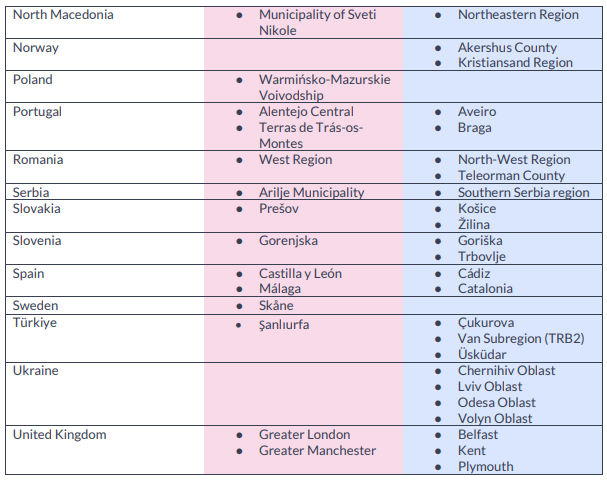
Sixty-two among the most vulnerable European regions (full list here) have been selected to increase their climate adaptation plans under Pathways2Resilience, a flagship project of the EU Mission on Adaptation to Climate Change.
Launched in 2023, the programme now engages a total of 100 local and regional authorities – representing over 100 million people – in a range of trainings designed to enhance their preparedness for climate change impacts through proven resilience-planning approaches.
“I warmly congratulate all regions selected in the second Pathways2Resilience cohort” said Elina Bardram, Mission Adaptation Manager at the European Commission. “As a flagship initiative, Pathways2Resilience helps the EU Mission on Adaptation deliver on its objectives and advance regional climate resilience together, through tailored support and peer learning.”
The newly selected regions - home to around 55 million people - identified their top climate hazards affecting infrastructure, public safety, and the cultural sector: coastal and river flooding (43%), heat stress (36%), and droughts (21%).
“Being selected for Pathways2Resilience is a strong recognition of Worms’ long-term work on climate adaptation. Located in one of Germany’s warmest regions, we will use this support to further strengthen our climate resilience by integrating climate adaptation, heat and water strategies, and by learning with and from other European cities facing similar challenges,” stated Mayor Stephanie Rohr of the City of Worms, one of the newly selected regions in Germany.
“As a coastal and urban region facing increasing climate pressures, we look forward to strategic guidance, shared expertise, and tools that will support long-term, integrated climate adaptation planning,” said Iryna Vieklich, Grant Officer from Odesa Oblast, one of the Ukrainian selected regions.
“The Košice Self-Governing Region has long positioned itself as a green region, building climate resilience in close cooperation with municipalities and local stakeholders, primarily through nature-based adaptation measures. I am delighted that Košice Region has been selected for the Pathways2Resilience programme, as the growing risks of drought and extreme precipitation, along with our above-average vulnerability, highlight the need for systematic adaptation measures. This project will enable us to modernise the region’s adaptation strategy, leverage expert know-how, and engage in meaningful knowledge exchange with partner regions,” said Rastislav Trnka, President of the Košice Self-Governing Region, a Slovakian region selected for the new cohort.
“We are very pleased that East Iceland [Austurland] has been selected to participate in the Pathways2Resilience programme. The region faces increasing climate-related challenges, particularly in rural and coastal communities, and this collaboration will support us in strengthening knowledge, developing practical solutions and building long-term adaptive capacity,” commented Berglind Harpa Svavarsdóttir, Chair of the Association of Municipalities in East Iceland (SSA), following Austurland’s selection as a Pathways2Resilience region.
The newly selected regions join the 38 regions that have started the programme in October 2024, gaining valuable peer support and experience. Each region will receive 210.000€ in grant funding alongside access to tailored tools and guidance, interactive peer learning, mentoring, and expert guidance. The cohort will have 18 months to develop a robust climate resilience strategy, as well as an action and investment plan. This second round represents the final allocation of the EU-funded project’s €21 million cascade funding.
Budapest summit: gathering Europe’s adaptation community
On February 11th, these 100 regions will gather in Budapest—a city already facing floods and heatwaves but known for its innovative climate resilience efforts—for the Pathways2Resilience summit. The city has moved from fragmented planning to a cohesive resilience strategy, implementing green development initiatives, a rainwater management plan, and measures to combat urban heat and flooding, including the award-winning Pünkösdfürdő Park along the Danube.
The summit will celebrate the achievements of the first cohort while passing the baton to the second, advancing Pathways2Resilience’s mission to accelerate regional adaptation as Europe warms twice as fast as other continents.
“With 100 regions now on board, Pathways2Resilience is creating a powerful network of local communities committed to climate adaptation” said Thomas Koetz, Senior Advisor for Climate Resilient Regions at Climate KIC and Pathways2Resilience programme coordinator. “This second cohort brings fresh energy and diverse perspectives, helping us accelerate Europe’s resilience journey at a time when climate impacts are intensifying. As programme coordinator, Climate KIC is proud of how far we’ve come in turning ambition into actionable plans that safeguard people, economies, and ecosystems.”
Pathways2Resilience participating regions
About Pathways2Resilience: Pathways2Resilience is a flagship project of the EU Mission on Adaptation to Climate Change. EU Missions are novel instruments meant to fast-track implementation of the EU Green Deal in five areas, including climate adaptation. For more information, visit www.pathways2resilience.eu
About ICLEI - Local Governments for Sustainability: ICLEI – Local Governments for Sustainability is a global network of more than 2,500 local and regional governments committed to sustainable urban development. Active in 125 countries, we influence sustainability policy and drive local action for low emission, nature-based, equitable, resilient and circular development. ICLEI Europe provides members in Europe, the Middle East and West Asia with a voice on European and international stages, a platform to connect with peers, and tools to drive positive environmental, economic and social change. ICLEI Europe works closely with an extended network of local and regional governments and partners on a broad range of topics.